Navigating C&I Energy Storage Investments: Five Critical Pitfalls to Sidestep

The commercial and industrial energy storage market is expanding rapidly as businesses seek to mitigate rising electricity costs, enhance energy resilience, and capitalize on incentive programs. However, the speed of market growth can lead to rushed decisions, with project managers sometimes committing to contracts without fully grasping the long-term implications. The outcome? Systems that underdeliver on performance, budgets that overrun, and return-on-investment horizons that extend well beyond initial forecasts.
To support informed decision-making, this article outlines five common investment pitfalls in C&I energy storage—and practical guidance on how to avoid them.
Pitfall 1: Overlooking Total Cost of Ownership
A frequent misstep is evaluating a storage system based solely on its upfront purchase price. While the capital cost is clear, many ongoing expenses—such as operations and maintenance, component replacements, grid interconnection fees, insurance, and software licensing—often remain hidden until after the contract is signed. Over a project’s 10- to 15-year lifespan, these cumulative costs can substantially diminish the returns projected in the initial proposal.
How to avoid it:Insist that vendors provide a comprehensive lifecycle cost model, not just a capital quote. Inquire specifically about guaranteed annual degradation rates, assumptions for component replacement cycles, and the scope of warranty coverage.
Pitfall 2: Incorrect System Sizing
Both oversizing and undersizing a storage system can negatively impact payback periods. An oversized system locks capital into unused capacity, while an undersized one fails to fully address peak demand charges or maximize energy arbitrage opportunities. Accurate sizing requires a detailed analysis of your facility’s load profile—including when peaks occur, their duration, and how they vary seasonally.
How to avoid it:Seek flexible, modular system architectures that enable right-sizing at installation and straightforward expansion as your needs evolve. Ensure the solution can adapt to changing load patterns without compromising efficiency.
Pitfall 3: Compromising on Safety and Certification Standards
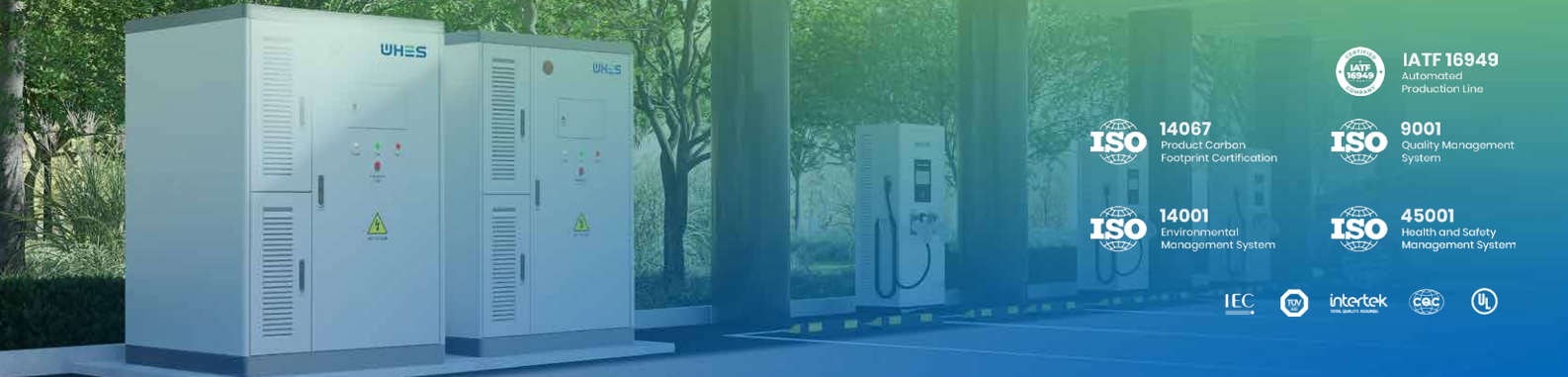
In competitive sales environments, some suppliers may minimize the importance of independent safety certifications. Deploying a system without recognized third-party approvals can create liability exposures, invalidate property insurance, and in certain regions, prevent grid interconnection altogether. Certifications such as UL9540A, VDE 4110, and appropriate IP ratings demonstrate that a system has been rigorously tested under fault conditions.
How to avoid it:Request actual certification documents and verify that the issuing body is accredited in your jurisdiction. Ask detailed questions about the system’s fire protection layers—including detection, suppression, and isolation mechanisms—and what triggers each level.
Pitfall 4: Restricting Use-Case Flexibility
Selecting a storage system optimized for only one application—like peak shaving or self-consumption—can forfeit additional revenue streams or cost-saving pathways. A well-designed C&I storage solution should support multiple use cases, such as time-of-use arbitrage, demand response, microgrid operation, and fast frequency response, allowing you to adapt as energy markets and tariff structures change.
How to avoid it:Confirm that the system can be reconfigured for different operational modes as your energy strategy evolves. Ask how software updates or strategy adjustments can be implemented in response to regulatory or market shifts.
Pitfall 5: Underestimating Maintenance Demands and Downtime Risks
A storage system that is frequently offline for maintenance or repairs generates no savings—downtime carries a direct cost. Designs that require labor-intensive servicing, specialized technicians for routine tasks, or have slow vendor response times can erode profitability over the project’s lifetime.
How to avoid it:Prioritize systems with maintenance-reducing features, such as automated fluid management, accessible components for routine checks, and remote monitoring capabilities that enable proactive issue resolution. Scrutinize warranty terms for clarity on coverage duration, response time commitments, and spare parts availability.
The WHES PC-G2: Engineered to Address These Challenges
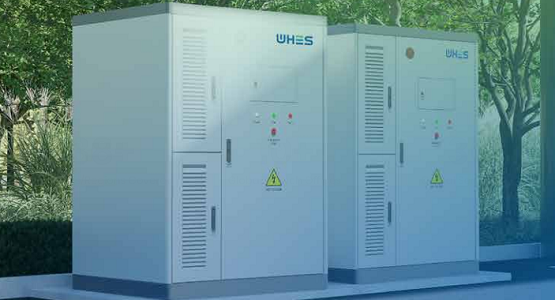
The WHES PC-G2 250kW/509kWh C&I Energy Storage System is designed from the ground up to mitigate the risks outlined above:
- Predictable Lifetime Economics: Utilizes CATL 306Ah long-life battery cells rated for over 10,000 cycles and a service life exceeding 10 years (SOH ≥70%). Enhanced by AI-driven battery management system monitoring and uniform thermal control to minimize degradation.
- Adaptable Scalability: Modular AC/DC architecture supports flexible configurations from 2 to 8 hours, with parallel deployment of up to 6 units for a total capacity of 1.5 MW/3 MWh—enabling precise sizing today and seamless expansion tomorrow.
- Comprehensive Safety Design: Incorporates a three-layer fire protection system (detection, suppression, isolation) and holds UL9540A certification. Built with robust environmental protection (IP67 battery pack, IP55 cabinet, IP65 PCS, C5 anti-corrosion) for demanding industrial, coastal, and outdoor installations.
- Multi-Application Readiness: Integrated with the WHES OS energy management platform for real-time optimization across peak shaving, valley filling, renewable smoothing, self-consumption, time-of-use arbitrage, and demand response programs.
- Reduced Operational Burden: Features a patented wall-mounted liquid cooling module with automated fluid refill, cutting both routine maintenance time and unplanned downtime.
Making a Sound Long-Term Investment
The energy storage system you select today will shape your operational and financial outcomes for the next decade or more. By prioritizing full lifecycle cost transparency, independently verified safety certifications, and reliable performance guarantees, you can navigate common investment pitfalls and secure a solution that delivers sustained value. For storage systems built to meet these rigorous standards, contact WHES to explore your options.